Easy Chicken Stir Fry with Seasonal Vegetables
There is a simplicity to stir fry that I find endlessly interesting.
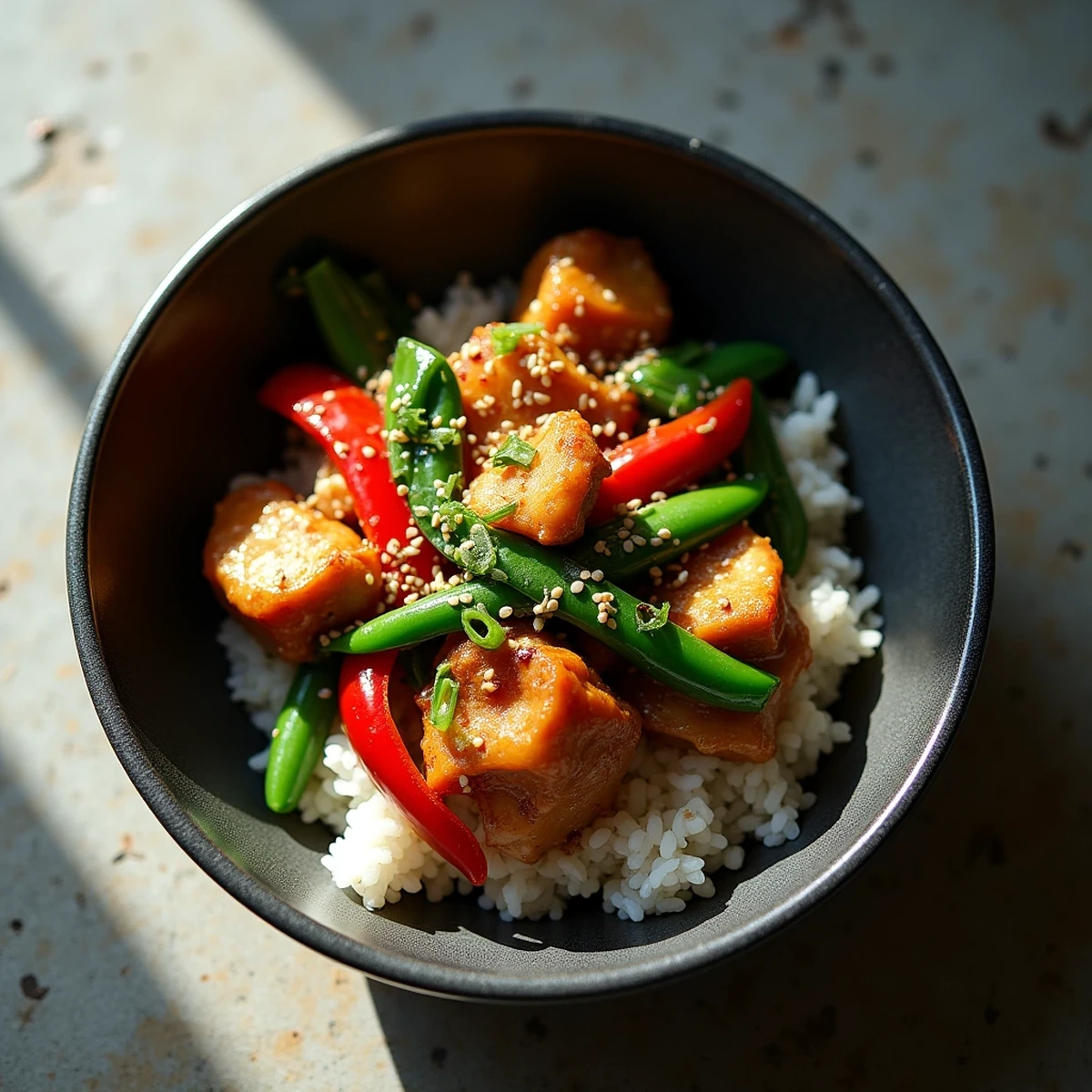
There is a simplicity to stir fry that I find endlessly interesting. It is one of the oldest cooking methods in existence — high heat, a well-seasoned pan, ingredients that know how to behave — and yet it rewards attention in ways that slower cooking does not. Everything happens quickly. The margin for error is narrow. That is the point.
I make this often in the weeks when the garden is producing faster than I can plan around it. Snow peas climbing the trellis, bok choy coming in thick, scallions that need cutting back. The wok solves all of it. This version uses chicken thighs — not breasts, never breasts for this — and a sauce built from pantry staples that I always have: tamari, rice vinegar, sesame oil, a knob of ginger, a few cloves of garlic. Obaachan would recognize every element. She would also tell me I needed more heat.
The plating here is deliberate. I use a wide, low earthenware bowl in charcoal glaze — one of Tomo’s pieces, with a matte interior that holds the sauce without competing with the color of the vegetables. The chicken goes in last, over the rice, with the scallions cut thin on a hard bias and a few drops of toasted sesame oil finished at the table. Negative space matters even in a bowl. Resist the urge to fill it.
Ingredients
- 600g boneless, skinless chicken thighs, cut into 3cm pieces
- 2 tablespoons tamari (or soy sauce)
- 1 tablespoon rice vinegar
- 1 teaspoon cornstarch
- 3 tablespoons neutral oil, divided (grapeseed or avocado)
- 1 teaspoon toasted sesame oil, plus more to finish
- 4 cloves garlic, minced
- 20g fresh ginger, peeled and grated (about a 4cm knob)
- 1 tablespoon gochujang (optional — adds gentle heat and depth)
- 200g snow peas, strings removed
- 2 heads baby bok choy, halved lengthwise
- 1 medium red bell pepper, cut into 5mm strips
- 4 scallions, white and green parts separated, cut on a hard bias
- 1 tablespoon tamari, for the sauce
- 1 tablespoon oyster sauce
- 1 teaspoon rice vinegar
- 1 teaspoon toasted sesame oil
- 2 teaspoons cornstarch dissolved in 3 tablespoons cold water
- Steamed short-grain rice, to serve
- Toasted sesame seeds, to finish
- Flaky sea salt, to taste
Instructions
-
- Combine the chicken pieces with 2 tablespoons tamari, 1 tablespoon rice vinegar, and 1 teaspoon cornstarch in a bowl. Toss until evenly coated. Set aside for at least 15 minutes — this marinade tenderizes and helps the chicken take on color quickly in the wok.
-
- Prepare the sauce: whisk together 1 tablespoon tamari, oyster sauce, 1 teaspoon rice vinegar, and 1 teaspoon sesame oil in a small bowl. Stir in the cornstarch slurry. Set beside the stove — everything moves fast once the wok is hot and you will not have time to measure.
-
- Heat a wok or large heavy skillet over the highest flame your stove allows for 2 minutes. The pan should be smoking. Add 2 tablespoons of neutral oil and swirl to coat. This matters — a properly heated wok is the difference between stir fry and a braise.
-
- Add the chicken pieces in a single layer. Do not stir. Let them sear undisturbed for 2 minutes until the underside is golden and releases cleanly from the pan. Toss and cook for another 2 minutes until cooked through with color on all sides. Remove the chicken to a plate and set aside.
-
- Return the wok to high heat. Add the remaining 1 tablespoon of neutral oil. Add the white parts of the scallions, garlic, and ginger. Stir constantly for 30 seconds — the kitchen should smell very good at this point. If using gochujang, add it now and stir for 15 seconds more.
-
- Add the red bell pepper and stir fry for 90 seconds. Add the bok choy cut-side down and press briefly against the wok surface to encourage browning. Toss after 60 seconds. Add the snow peas and stir fry for 60 seconds more. The vegetables should be bright, tender, and still carrying some resistance.
-
- Return the chicken to the wok. Pour the sauce over everything and toss quickly and continuously for 60-90 seconds until the sauce thickens, coats the chicken and vegetables evenly, and becomes glossy. If the sauce tightens too fast, add 1 tablespoon of water and toss again.
-
- Remove from heat. Add the green parts of the scallions and the teaspoon of toasted sesame oil. Toss once. Taste for salt and adjust with flaky sea salt if needed — the tamari carries most of the seasoning, so go carefully.
-
- Serve immediately over steamed short-grain rice in a wide, low bowl. Finish with toasted sesame seeds and 2-3 drops more sesame oil at the table. The heat should still be rising from the bowl when it arrives.
Nutrition
Tips
1. Use chicken thighs, not breasts. Thighs stay tender at high heat. Breast meat dries out in the time it takes the wok to develop color on the outside — by the time it looks right, the center is overcooked. Thighs forgive you. They also carry more flavor, which matters in a dish built on speed.
2. Mise en place is not optional here. Unlike a braise or a bake, stir fry does not wait. The entire cook is 12 minutes and most of it is under 2 minutes per step. Have every ingredient cut, measured, and placed beside the stove before you turn on the heat. The prep is where the craft lives in this dish.
3. Cook the rice first, then rest it covered. Short-grain rice improves with 10 minutes of covered resting after cooking — the steam redistributes and the texture becomes more cohesive. Start the rice before you begin the stir fry and it will be ready exactly when you need it.